Three years at Kohn Pedersen Fox.
Before I wrote production code, I designed buildings — chasing whether an idea could hold up all the way from a compelling section drawing down to the mechanical run behind a wall. This page is about that training: a couple of projects I still think about, a decision that stuck, and what it left behind once I started building systems instead of buildings.
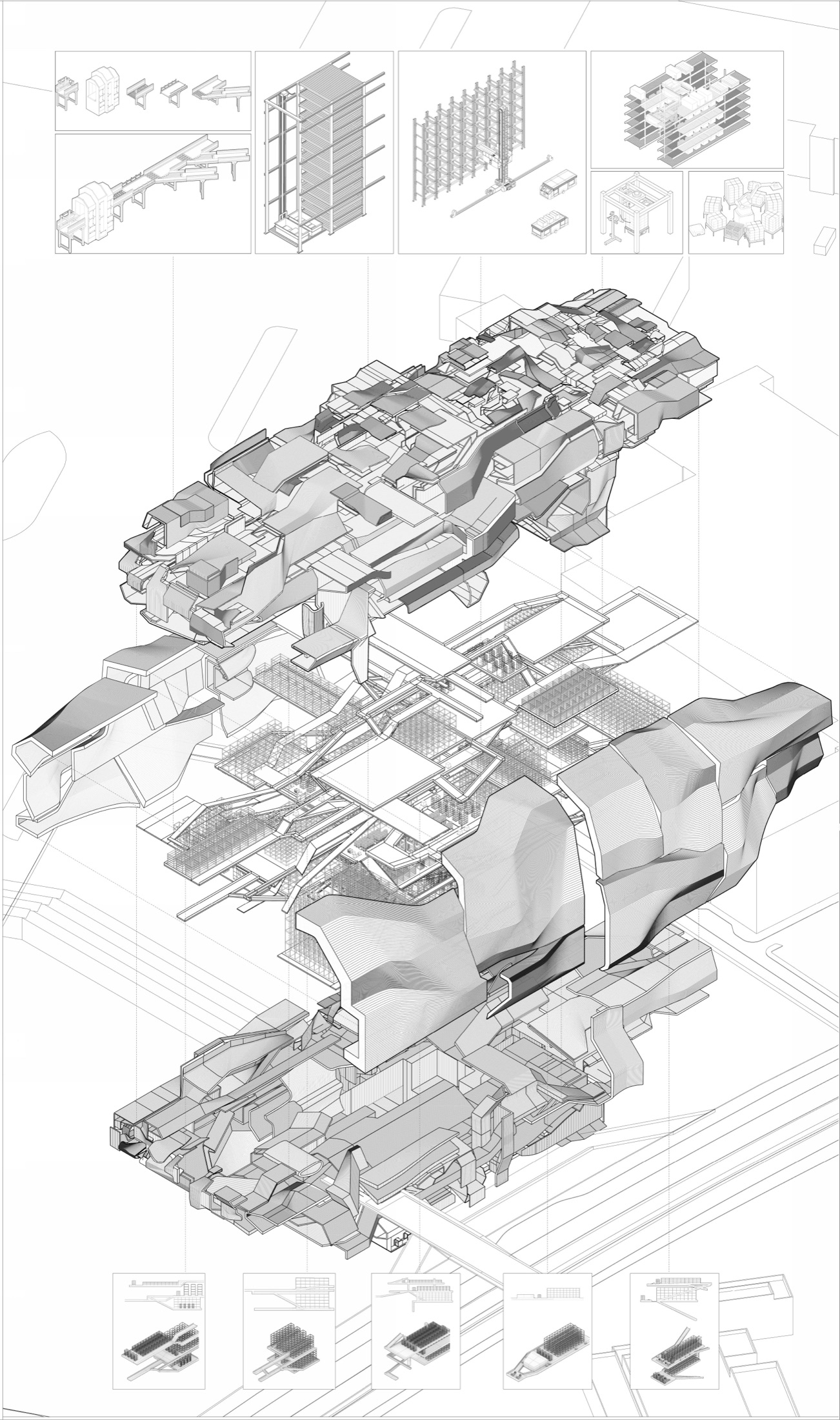
The one I still go back to is an Auto Industry Community Center, designed as an exploded section: the building’s fluid exterior form pulled apart from the interior mechanical systems it has to contain, so both are visible making their case at once. Most studio work asks you to resolve the skin first and hide the systems behind it. This one only worked if the mechanical layers and the exterior form negotiated with each other in the same drawing. It’s the first project where I stopped treating structure and services as something to conceal after the form was decided.
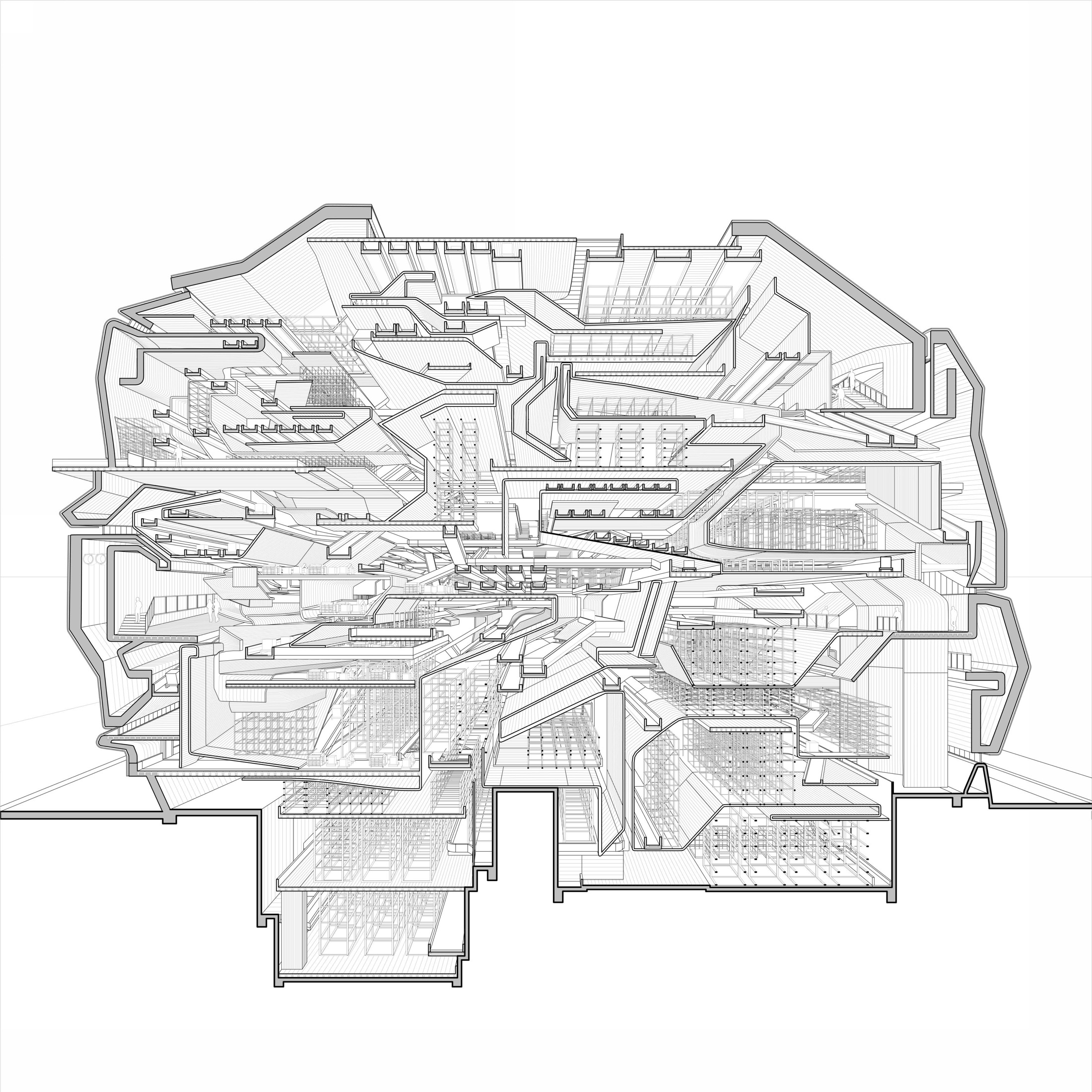
A speculative Future Airport study — a logistics problem disguised as a building — is where a habit stuck. Instead of starting from the terminal’s public face, I built the design from a single section perspective cut through the whole structure, so the internal logistics system and the micro-surfaces around it had to be resolved before I let myself decide what the exterior looked like. It was slower, and you can’t fake a section that has to actually work. It’s the same instinct I use now: look at how a system behaves end to end before trusting what it looks like from the outside.
I’d be more skeptical of concept-first narratives. A casino competition entry for Longbay, Cambodia was built around connecting the seven chakras to Khmer culture — a genuinely interesting idea, and one a jury could follow. But I leaned on the narrative to justify formal moves that needed a harder, more technical defense. I’d still start from a strong idea. I just wouldn’t let it stand in for the systems thinking a design actually needs to hold up.
“I call architecture frozen music” — Goethe, a line from my old portfolio that still holds: the point was never the surface, it was the logic frozen inside it.
Three years of that training taught me to hold a system in my head before I could see all of it — to trust a section or a diagram as much as the finished rendering. That transferred almost directly into software: a safe AI agent or a legacy integration also has to be designed in section, tracing how each part touches the ones around it before you trust what the interface shows the user. What I left behind was the slowness — architecture measures progress in months per building; software lets me test an idea in an afternoon. That trade is most of why I made the move.